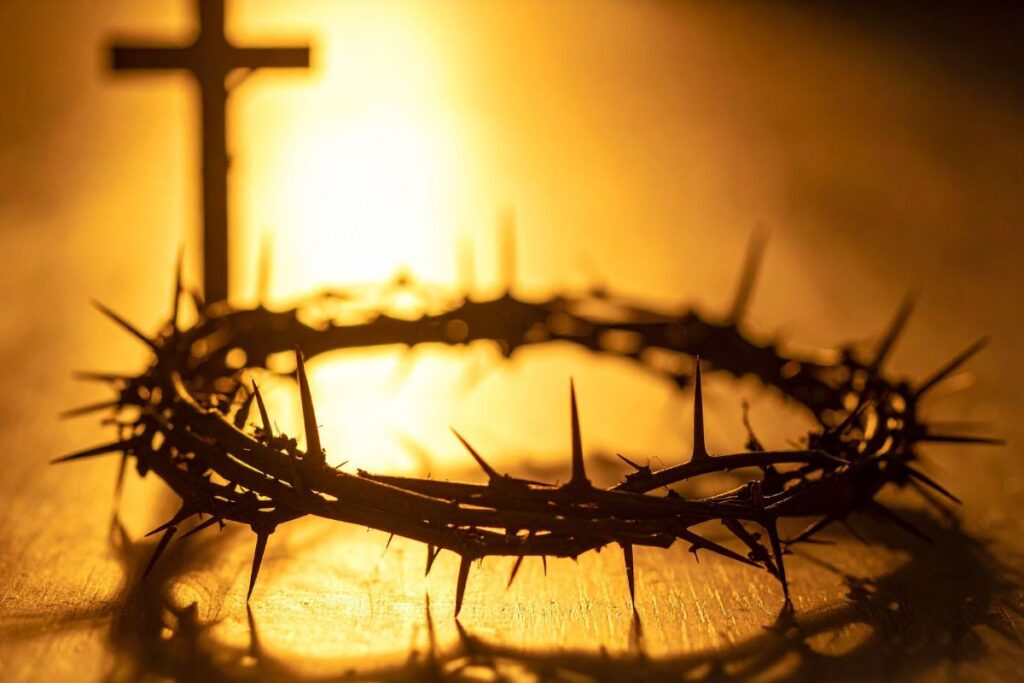
If you have been in church for any amount of time, you have probably heard the word “covenant” used. Even though we may have heard it used, we often don’t understand the true meaning of the word. As many of us prepare to celebrate the shedding of Jesus’ blood for the forgiveness of our sins and the life that we receive through his resurrection power, let’s take a few minutes to dig deeper into the promises involved in forming a blood covenant relationship with Jesus Christ.
The Holy Spirit also testifies to us about this. First he says: “This is the covenant I will make with them after that time, says the Lord. I will put my laws in their hearts, and I will write them on their minds.” Then he adds: “Their sins and lawless acts I will remember no more.” And where these have been forgiven, sacrifice for sin is no longer necessary.” Hebrews 10:15-18
In a lot of churches today, people do not hear the good news of the gospel. What they hear may sound something like this; “Here is a long list of what you should be doing and what you shouldn’t be doing. And if you do the wrong things and don’t do the right things, then God is going to be mad at you. If you conform to these laws and do everything right, then quite possibly you will be a good Christian.” That is the false gospel of religion. We have Christians who are trying to walk this religious tightrope. Gospel means “Good News.” News is an announcement of something that has already happened, not something you must attempt to do. Several hundred years ago, writers were calling it “the good, glad, merry news that makes a man want to dance, leap and spin for joy!” It is not something that I have to do for God, but something that he has already done for me and my response is to say “Yes!”
God has entered into covenant with us. The Bible is divided into 2 parts: The Old Covenant and The New Covenant. The Bible is actually a story about God entering into covenant with man. That is the Good News! The Hebrew word for covenant is Berit, it means to cut covenant by the shedding of blood. You don’t make a covenant with someone, you cut a covenant by shedding blood. Blood Covenant goes back to the dawn of history. In the garden of Eden there was a covenant after the fall. There was the shedding of animal blood and covering with animal skins. God taught humanity about the blood covenant. In every ancient civilization there was a form of the blood covenant. Even today, tribes in South America and Africa perform it almost the same way. They have added a few pagan rites to it, but the basics of the blood covenant are still the same.
The Steps in entering into a Blood Covenant
- The first act is for each man to take off their coats. It is a symbolic act. To the Hebrew, your coat represents who you are. In the New Testament, Paul said, “Put off the old man and put on the new.” It represents how you were before, the old way of existing. Putting on a new way of life. All that I am is coming to the other person.
- Take off your belt. It held your weapons- a dagger and sword. Here is my strength. All of my ability to fight is for you if you are ever attacked. If anyone touches you, they touch me too, and I will fight on your behalf.
Now the cutting of the covenant-
You would take an animal and cut it down the middle. Now there is a blood path. The two people stand between the walls of blood, walking to and fro between the pieces, in a figure-8 (the symbol for infinity), and stand facing each other. The symbolism of the walls of blood and the killing of the animal means “I am dying and my old way of life is dying, even as this animal has died. My way of living before this covenant is now over. I have died to all the rights I have in this life. I’m giving away all that I have to you. You can share it because now it is your life too. In the Hebrew, they would point to the animal and say, “If I break this covenant, God so do to me and more.” The blood covenant is an unbreakable covenant. The people symbolically enter into death, coming out a different kind of person. We die to our past and come alive to a new relationship. Then the people would cut themselves. They would cut themselves on the palm or the wrist and as the blood was running down their arm, they are swearing before a deity that they will keep these promises.
In the Hebrew, they would cut their wrists, while striking a pledge. As one person’s blood flowed into the other, the two came into union. Their lives were flowing together. Leviticus says “The life is in the blood.” My life is flowing into your life, your life is flowing into my life. We have come into union. From now on, the people would be known as “Blood Brothers”. Their names would change. Each person would take the name of the other. They included each other’s names, because they became one person, within the terms of this new covenant.
Then the people would make a seal. They would want a scar to be on the wrist. Often they would rub some kind of powder into the cut. It had a twofold effect. When the person saw it, they were reminded of the great responsibility. From then on, if anything happened to the one person, it has also happened to the other. If one got into debt, the other had to pay. If one came into money, the other had to share. It was also a great comfort, because if someone came after the one, he was never alone. Anything that came to the person, came to the other because of the covenant. The seal was a guarantee of covenant. It reminded the person of the blessing and the responsibility. Then the people would stand before witnesses and give the terms of the covenant blessings. Each person would share all of the benefits.
Finally, there would be a memorial meal shared. The meal was a simple meal, it was a loaf of bread and a cup of wine. They would break the bread and say “All that I am now goes into you.”
This Resurrection Sunday, may you rejoice in the beautiful gift of the ultimate blood covenant you are invited into with Jesus Christ!
Continue the Pursuit,
Denise